Project
TesseraMy local reading notebook on a Mac, an Android phone and in the browser, with cited highlights, linked notes, study cards and attributed perspectives I can compare.
b60gxlqhp1 · Working
Read full projectProject/ build sheet
Tessera
My local reading notebook on a Mac, an Android phone and in the browser, with cited highlights, linked notes, study cards and attributed perspectives I can compare.
- Kind
- Project
- Permanent uid
- b60gxlqhp1
- Drawn
- Checked
- Approved
- Pending
- Graph / sources
- 2 in · 2 out / 0 sources
- State
- working
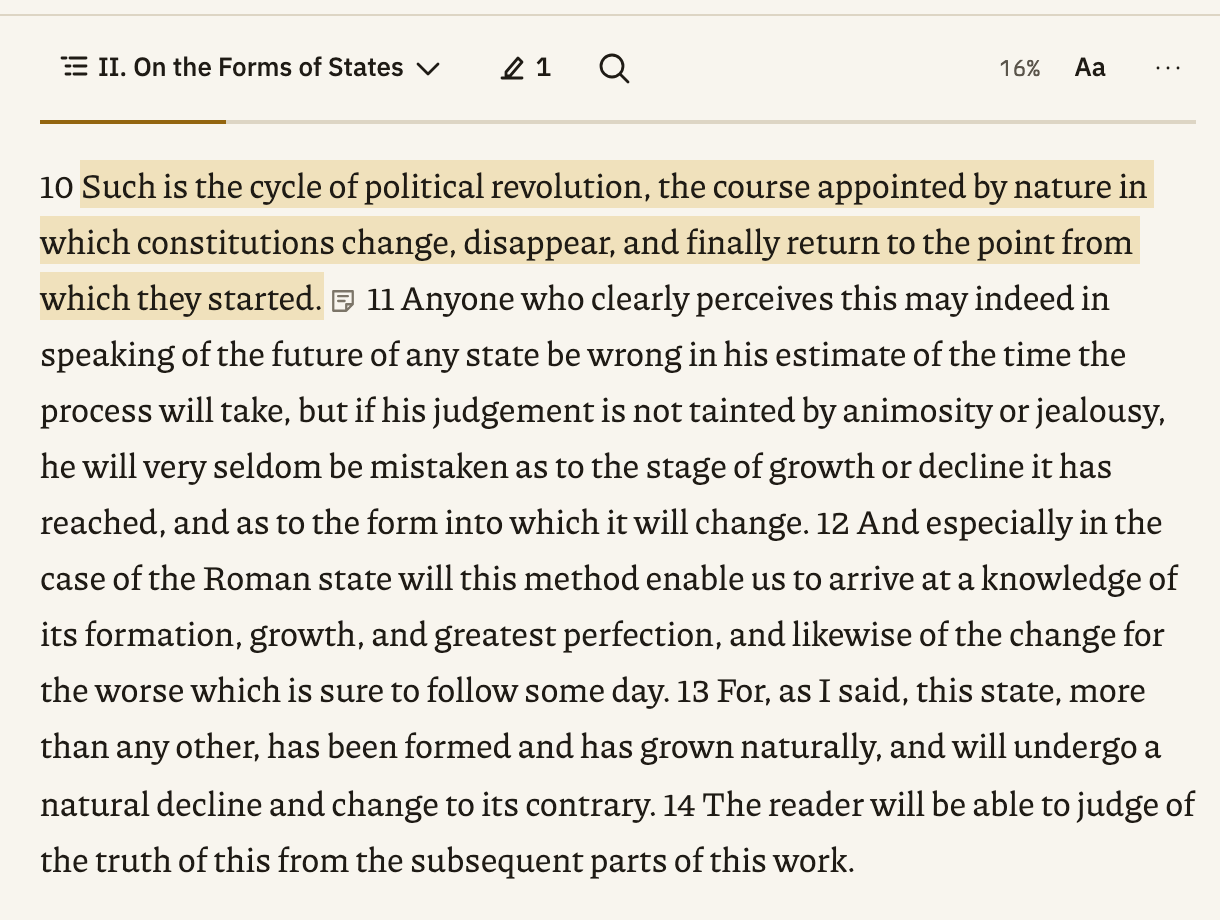
I started Tessera on 1 October 2026, after an earlier note-taking prototype. It’s my local reading notebook. Pages and journals hold addressable blocks; references, search, tasks and study cards use those same blocks. Two working panes let me follow a reference or open a book beside the notes I’m writing.11Prototype lessons and implementation guide.
I can ingest EPUB books and web articles as immutable snapshots, read them in the library’s reader, and turn selections into cited highlights. Notes and cards grow beneath those highlights. The library keeps reading states and saved views; its Highlights tab works through quotations in reading order. Sources export as BibTeX or CSL JSON; highlights and their notes as Markdown.22Library mechanics and exports. Library: fb76207; Markdown: 6615636; Highlights in reading order: 4c653a4.
Today’s journal opens with Agenda, Review and Reading tiles above the outline, and today’s tasks fold open beneath them. Cards come from the blocks I write, including templates on a type and RemNote-style descriptor cards, and FSRS schedules their reviews. Review sits beside the notes a card comes from.33Today tiles: 931f8e2; today’s tasks under the Agenda tile: 29152f0; FSRS: 42eb974; card templates on types: 9203919; descriptor cards: fe89714. Journal and cards and review.
Titled pages have glosses and a four-stop depth dial: Gloss, Opening, Perspectives and Full. A position links a holder to a subject, with a gist, source mark and ordinary fields. Holder pages list perspectives held. Compare sets chosen readings side by side, and its criteria matrix puts holders in columns and the subject’s criteria in rows; each value is the position’s authored block, editable in place.
Questions can be open, answered, parked or unsettled, with dated answers, an accepted assessment and review dates. A concept pane wide enough for the apparatus margin shows holders, incoming linked pages and a source key when it has at least three perspectives.44Gloss and depth: 9677271; sigla: eb0a026, with three-letter defaults in 1c1c5c0; positions and compare: 64de8af; criteria matrix: c92b67d, 11 October; questions: cda0dbf; apparatus: 8383a51. Current design rules.
Notes have kinds, such as Person, Concept and Thesis, and aliases, so Tully finds Cicero. Each kind opens a finding aid listing its notes under letters. A row that holds only ((...)) keeps the quoted block as it stood, with the capture date beneath.55Note kinds, aliases and finding aids; frozen quotes: 0512873, 655def6.
Tessera runs in three places. On the Mac, the app’s window talks to a notebook service that runs as a launch agent, so closing the window leaves agents, ingestion and sync running. The app updates itself from signed GitHub releases, and ⌘⇧E from any app opens a line that adds to today’s journal. On Android, the notebook runs inside the app with no listening port. I can read with touch page turns, import EPUBs from the share sheet, and add a note or task from the launcher icon.66Using the macOS and Android apps. Self-updating Mac app: ffade5b; ⌘⇧E capture panel: 21f09a3; Android app: c3bf80f; touch page turns: af9b1ab; launcher shortcuts and sharing: f232bc9, 69c8fe3.
At tessera.solforged.io, the same engine runs as WebAssembly in a worker and keeps a notebook in the browser’s private storage. A visitor can start empty, take a tour seeded with Marcus Aurelius’s Meditations, or restore a backup. Chromium browsers can install it as an app that opens in its own window and starts without a network connection. Only one window holds the notebook at a time; another can take it over.77Browser app. Wasm and OPFS notebook: 02a812f; first-run choice and backups: e8e6e5f; installable offline app: a974d8b; window takeover: cd17a84.
The Mac is the hub. A phone pairs with it by scanning a QR code, then syncs over my tailnet through Tailscale Serve: when the app opens, and every half minute while it’s on screen. A phone that isn’t paired keeps a notebook of its own. Text edited on both devices while offline comes back as a copy beside the block, named for the device, which I can use, discard or keep. A mark beside the wordmark shows sync state: a filled dot when synced, a hollow ring when the Mac is unreachable or something needs review. The browser notebook doesn’t sync; its downloaded backup is the only copy outside the browser.88Sync design, including the tailnet transport and pairing. Loopback replication: 1da5cb4; tailnet listener: 72538c7; pairing and the phone sync sheet: 6fbbc97; kept copies: cfa6b59; sync mark: 4c54e5d.
An agent reaches the notebook through tessera mcp or the service’s agent API, with the same checked operations as the editor. It can read pages, the agenda, cards and the library, and write notes, tasks, cards and citations. Each change carries the agent’s name, and I can undo it from Settings.99Agent tools. MCP and the attributed note API: 5f0a67e; reversible agent edits: 769c4df; task, card, query and library tools: 2445539.
The core and local service are written in Rust, with a SQLite notebook and a content-addressed store for source files. The editor uses Solid, TypeScript and Vite. The Mac and Android apps are Tauri 2 shells around it. The service’s editor routes listen on loopback; a second, keyed listener serves only sync and pairing to the tailnet. Each release ships a macOS app, an Android APK and a Linux command line. Orrery has ink-blue dark and vellum light themes, selected per device. Sans is for writing, serif for titles and reading, monospace for apparatus. Titled pages read as prose; journals keep bullets.1010Architecture. Installation: 087ddb8; Orrery: ba00996; prose: 9d6c1bb; unified styling: 3ef7808; light theme: b2f9545; Android APK in releases: 6a74c94. Berkeley Mono is installed locally, with system fallbacks.
The primitives behind Tessera traces how trails, outlines, fields, cited passages and layered reading led to attributed positions on one subject. Multiperspectival notes covers the reading design shared with this site. Still ahead are the capture stage’s browser extension, feeds, newsletters and book providers; assessments that cite positions and passages; agent plans previewed before they apply; and note revisits, settled notes and spreads that set several notes side by side. Collaboration and an iOS app aren’t planned.1111Capture, inquiry, trust and notes stages, and not planned. This project page records the implementation through 7afa21a, 12 October 2026; release 0.3.0 came out the same day.
Footnotes
-
Library mechanics and exports. Library:
fb76207; Markdown:6615636; Highlights in reading order:4c653a4. ↩ -
Today tiles:
931f8e2; today’s tasks under the Agenda tile:29152f0; FSRS: 42eb974; card templates on types:9203919; descriptor cards:fe89714. Journal and cards and review. ↩ -
Gloss and depth:
9677271; sigla:eb0a026, with three-letter defaults in1c1c5c0; positions and compare: 64de8af; criteria matrix: c92b67d, 11 October; questions:cda0dbf; apparatus:8383a51. Current design rules. ↩ -
Note kinds, aliases and finding aids; frozen quotes:
0512873,655def6. ↩ -
Using the macOS and Android apps. Self-updating Mac app: ffade5b; ⌘⇧E capture panel:
21f09a3; Android app: c3bf80f; touch page turns:af9b1ab; launcher shortcuts and sharing:f232bc9,69c8fe3. ↩ -
Browser app. Wasm and OPFS notebook: 02a812f; first-run choice and backups:
e8e6e5f; installable offline app:a974d8b; window takeover:cd17a84. ↩ -
Sync design, including the tailnet transport and pairing. Loopback replication:
1da5cb4; tailnet listener:72538c7; pairing and the phone sync sheet:6fbbc97; kept copies:cfa6b59; sync mark:4c54e5d. ↩ -
Agent tools. MCP and the attributed note API: 5f0a67e; reversible agent edits:
769c4df; task, card, query and library tools:2445539. ↩ -
Architecture. Installation:
087ddb8; Orrery:ba00996; prose:9d6c1bb; unified styling:3ef7808; light theme: b2f9545; Android APK in releases:6a74c94. Berkeley Mono is installed locally, with system fallbacks. ↩ -
Capture, inquiry, trust and notes stages, and not planned. This project page records the implementation through
7afa21a, 12 October 2026; release 0.3.0 came out the same day. ↩
Linked from · 2
Multiperspectival notesInvestigation
…account. I also wanted several authors' readings to meet and stay distinct. The reading sheet on anacyclosis now does that on this site. Tessera, where I'm building the making side, has glosses, attributed perspectives and comparison too.
The primitives behind TesseraInvestigation
I wanted Tessera to hold several analyses of one subject without making me reconstruct their relationship each time. A concept could have an opening account…